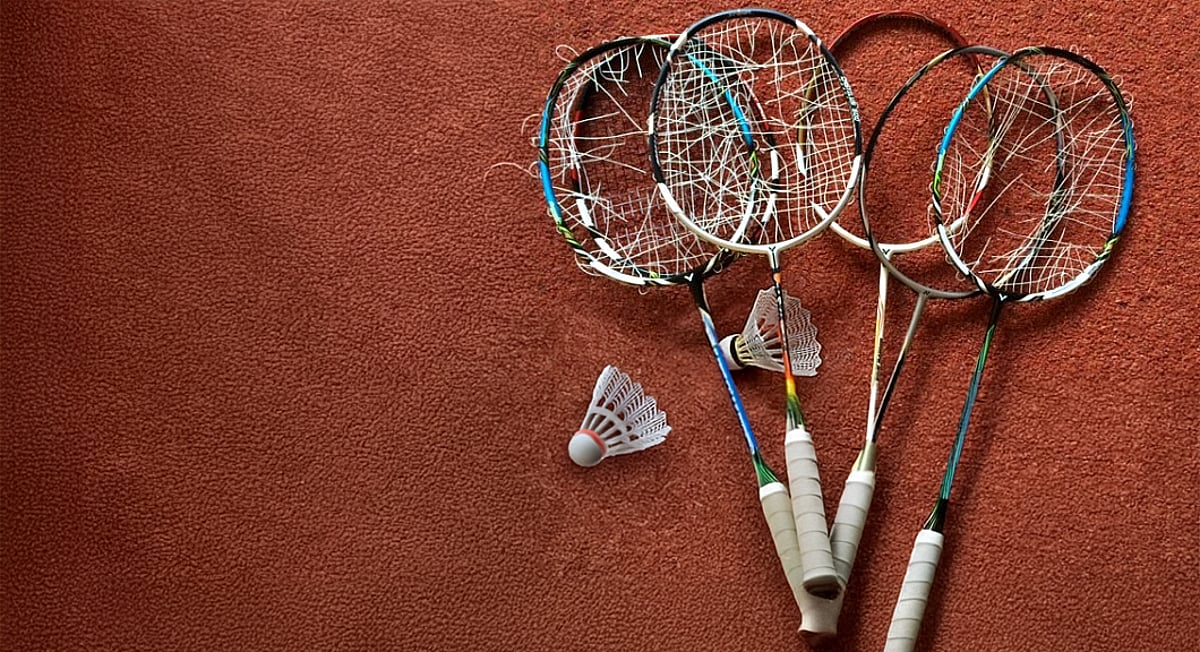

What ails Indian badminton? The sport that has given India lots of global medals is spiraling down a dark rabbit hole. Unfortunately for the sport, there is no wonderland in sight. Not as yet.
If last year had been a near-disaster culminating in the medal-less run at Paris, almost halfway through this year, there seems to be no respite. In 11 BWF World Tour events, no Indian has crossed the semifinal hurdles. In men’s and women’s singles, the performances have been less than ideal. An aging PV Sindhu has lost her midas touch. Lakshya Sen is still to recover from the loss he suffered against Lee Zii Jia at the Olympics after being up a game and leading 7-2 in the second. HS Prannoy, too, is looking jaded. Even the lone spark — the promising doubles pair of Chirag Shetty and Satwiksairaj Rankireddy — has been struggling with injuries.
The latest tournament, Thailand Open, a BWF 500 series, is a testimony to India’s plummeting fortunes. Their top-ranked player, Lakhsya, lost in the first round. Others perished in the second. Former World No 1, Kidambi Srikanth, was playing in the qualifying rounds with four others in men and one in women. Top 32 in the world usually make the cut for the main draw. And a sizeable number of the players were the next-gen players, which should be a bigger concern for the Badminton Association of India (BAI), Sports Authority of India (SAI) and other stakeholders, including non-government organisations, sports foundations and player agents. The reality is that youngsters are still not ready.
Just before the Covid lockdown, things never looked this bleak. By then, India had two Olympic medals – Saina Nehwal (bronze in 2012 London) and Sindhu (silver at 2016 Rio Games – her first) – and a host of men’s players in singles started to flourish in BWF World Tour events. There was continuity from Saina to the next lot of players. They were either training in Hyderabad or Bengaluru. But at the moment, India is looking at a blank board. The players the country is relying upon (likes of Unnati Hooda, Malvika Bansod, Aakarshi Kashyap in women’s and Priyanshu Rajawat, Sathish Kumar Karunakaran, Tharun Mannepalli (men’s singles)) are still raw. Some of them have been on the top level of the circuit for two-three years. Contrast this with Sindhu. Of course, she is an exceptional talent. She won her first Worlds medal at the age of 18, four more followed. Her Olympic silver in Rio was at the age of 21. Saina was 22 when she won Olympic bronze. Even Srikanth started winning BWF events at the age of 22. Among the current lot, Unnati is 17 and Ayush Shetty is 20 with the others in their early 20s.
This is not the case with other countries. Take for instance He Bingjiao, the Paris Games silver winner. She announced retirement at the age of 28 and a bunch of Chinese women singles players (considered to be the gold standard) have already taken her place and are in the top 15.
Fundamental flaw in the system
This brings us to a pertinent question. Where did India go wrong since the days of Saina, Sindhu and Srikanth? A system producing Worlds and Olympic medallists was suddenly not good enough. Pullela Gopichand, the chief national coach even now, produced the Olympic medallists while U Vimal Kumar, at the Prakash Padukone High Performance Centre, helped top players like Lakshya. Strangely, the chief national coach has not been frequent in big tournaments abroad in the last three-four years.
Another point that experts point at is a lack of good quality coaches. There are centres supported by BAI and SAI but not coaches. This is linked with growing popularity of the sport which has led to the exponential growth of academies across the country. More players started taking up the sport. The entries for Nationals rose from hundreds to thousands. The ratio of coaches for players started increasing but quality coaches are still lacking, especially at the grassroots. Offers are not lucrative enough to attract former players to take up coaching full-time for the national teams. This has been pointed out by Gopichand as well when a handful of player-turn-coaches left for better pastures. Even he acknowledges that the system is disrupted but didn’t want to elaborate. “I have explained my opinion to the top people in SAI/BAI and I am hoping that we find a solution,” he said.