

Flexible printed circuit board
Unlike rigid PCBs, flex circuit boards have a high degree of elasticity, and can be shaped into various 2D shapes. They also contain integrated interconnects that avoid external cables and connectors, and are highly durable. They are resistant to vibrations and mechanical shocks, and can withstand high temperatures. These benefits are the result of the use of several different materials in a flex PCB.
The most common material for a flexible printed circuit board is Polyimide. It is a thin film that has been coated with a layer of epoxy resin, making it a strong and resilient material. This allows the circuit to bend and flex without cracking or breaking. It is also incredibly tough and heat resistant, and can withstand up to 400°C.
Other types of materials are also used for a flexible printed circuit board, such as copper foil, FR4, and Kapton. These materials are laminated to a core of PI or PET films, or a thin flexible-epoxy-and-glass-fiber substrate. They are then covered with a layer of conductive ink (silver or gold) and then soldered on to the copper conductors. This covers the copper with a layer of insulation to protect the circuit from corrosion and other damage, and also prevents it from conducting current where it shouldn’t.
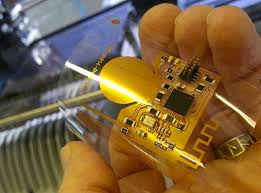
What materials are crucial for Flexible printed circuit board?
The copper used in a flex circuit can be solid or patterned, but the best choice is hatched copper. This is more flexible than solid copper and allows a much higher level of design flexibility. Solid copper is more susceptible to buckling under tight radius bends, while hatched copper has less stress in 0deg, 45deg, and 90deg angle directions. The most common pattern is a circle, although some manufacturers use hexagons or diamonds to further increase the flexibility of a flex circuit.
Another important factor to consider when selecting a flex PCB is the thickness of the copper plating. A thicker layer of copper will offer better electrical performance than a thinner one, but it can also be more expensive. You should also consider whether your flex circuit needs to be panel plated or pad-only plated, as the latter offers more versatility and control over copper thickness.
Adhesives are also crucial for a flexible circuit. Acrylic adhesives, epoxy adhesives, and pressure-sensitive adhesives (PSA) are all used to stick the components to the flex PCB. PSAs are a good option for flex PCBs because they are flexible, have excellent bond strength, and can adhere to the copper on the surface of the circuit.
The final element to consider is the bend radius of your flex PCB. A large bend radius is preferable, as it will reduce stress on the traces and help them last longer. Also, make sure that there are no discontinuities, such as cut-outs slits, and holes in a flex area, as these can cause stress and failure. In addition, the end of a flex PCB should have a circular section to reduce stress on the corners. This will also help reduce the occurrence of stress cracks and other problems.


