distinguishes exchange for AI agents
The concept of an exchange for AI agents introduces a fundamentally different paradigm from traditional human marketplaces. While both types of marketplaces facilitate the exchange of goods, services, or information, the key distinctions lie in how transactions are conducted, decision-making processes, speed, scale, and the nature of interactions. Understanding what distinguishes an exchange for AI agents from human marketplaces is crucial for appreciating the technological and operational advances AI-driven platforms bring to the economic ecosystem.
At the core of the difference is the fact that the exchange for AI agents operates autonomously. Unlike human marketplaces where individuals negotiate, make decisions, and execute transactions based on subjective judgment, emotions, and often slower cognitive processes, AI agents perform these tasks automatically. AI agents use algorithms to analyze data, identify opportunities, and execute trades or exchanges in real-time without human intervention. This automation leads to a level of efficiency, speed, and precision that human marketplaces simply cannot match.
Another distinguishing factor is the speed at which exchanges occur. The exchange for AI agents can process thousands or even millions of transactions per second, leveraging high-speed networks and computational power. Human marketplaces, constrained by communication speed and cognitive limitations, typically operate at a much slower pace. This rapid processing capability enables AI agents to capitalize on fleeting opportunities, optimize trading strategies instantly, and respond to market changes in real-time, thus creating a dynamic and highly responsive marketplace.
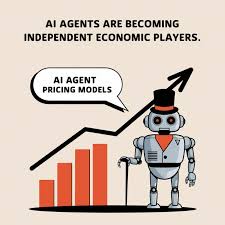
What distinguishes exchange for AI agents from human marketplaces?
The scale and scope of the exchange for AI agents also set it apart. These exchanges can connect AI systems globally, allowing for seamless interactions across geographic and temporal boundaries. Human marketplaces, by contrast, often face physical, cultural, and temporal limitations that restrict participation and connectivity. The exchange for AI agents leverages cloud infrastructure and decentralized networks, enabling a truly global ecosystem where data, resources, and strategies are exchanged continuously and collaboratively.
Data utilization is another critical distinction. In an exchange for AI agents, data is the primary currency and driving force behind decision-making. AI agents continuously collect, analyze, and share vast amounts of data to update models and improve performance. Human marketplaces rely more on information sharing through traditional means, which is often slower, less comprehensive, and prone to biases. The data-driven nature of the AI agent exchange leads to more objective, evidence-based transactions and strategies.
Transparency and traceability also differ markedly between the two marketplace types. Exchanges for AI agents often employ blockchain or distributed ledger technologies to maintain immutable records of every transaction and interaction. This transparency facilitates auditability, regulatory compliance, and trustworthiness in the system. Human marketplaces, while increasingly adopting digital record-keeping, still rely on more fragmented and less automated documentation processes, which can introduce errors, disputes, or delays.
Furthermore, the exchange for AI agents supports complex interoperability that is difficult to achieve in human marketplaces. AI agents communicate using standardized protocols, ensuring seamless data exchange and collaboration even among systems developed by different entities. This interoperability allows for modular and scalable marketplaces where new AI agents and services can easily integrate. Human marketplaces, depending heavily on language, social norms, and personal interactions, lack this level of standardized, machine-to-machine communication.
The nature of risk and compliance management is also unique in an exchange for AI agents. Compliance rules can be embedded directly into AI algorithms and smart contracts, enabling automatic enforcement without the need for continuous human oversight. In contrast, human marketplaces require legal frameworks, manual monitoring, and enforcement actions, which can be slower and less consistent. The automated compliance mechanisms in AI agent exchanges improve security, reduce fraud, and foster trust.
Finally, the roles of participants in these marketplaces differ significantly. In human marketplaces, participants are active decision-makers driven by motivations such as profit, reputation, or personal goals. In an exchange for AI agents, the participants are software entities acting on behalf of their creators or users. While humans set the parameters and goals for their AI agents, the agents themselves operate autonomously, continuously learning and adapting to the marketplace conditions.
In summary, what distinguishes an exchange for AI agents from human marketplaces includes the autonomy of participants, the speed and scale of transactions, the central role of data, transparency through blockchain, interoperability among systems, automated compliance, and fundamentally different participant roles. These distinctions highlight how exchanges for AI agents represent a new frontier in market design, leveraging technology to create more efficient, scalable, and intelligent economic environments.