

PCB Board Assembly Manufacturing Be Recycled
Printed circuit boards are the “skeletons” that hold all the other components for electronic products. They are created with various materials, including fiberglass (as the core), a dielectric resin matrix, and copper. This copper layer is what carries the electrical signals that connect all the other components. It can either be etched directly into the bare substrate or in an additive process on top of it.
After soldering, the pcb board assembly manufacturing are washed with deionized water. This helps remove the residue from the soldering process, particularly the no-clean flux that has been used. This is a necessary step, as left-over flux residue can cause the solder joints to oxidize over time and reduce their lifespans. Moreover, it can leave the finished product looking dingy and unpleasant. Once the PCBs are washed, they’re dried with compressed air before being sent for inspection.
The next step in the traditional assembly process is applying solder paste. This can be done with either THT or SMT technology. Then the board moves to a conveyor belt that moves it through a reflow oven, which is similar to a large commercial pizza oven. The heaters in the reflow oven heat the melted solder to temperatures high enough to melt and flow, but low enough that it doesn’t damage the components. Then the board is cooled, which allows the melted solder to solidify and bond the components in place.
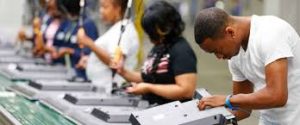
Can PCB Board Assembly Manufacturing Be Recycled?
Once the reflow process is complete, the PCB goes through an automatic optical inspection machine, or AOI. The AOI uses high-powered cameras that are angled at different ways to view the solder connections on each board. The AOI can see if any of the solder connections are of poor quality, and then correct them before the final product is shipped to customers.
As the demand for PCBs continues to rise, more manufacturers are turning to EMS providers for one-stop service from PCB manufacturing to assembly. This provides greater control over production and allows companies to deliver the most efficient products possible. In addition, it can help eliminate the risk of importing defective products that would require a costly and time-consuming return and replacement.
However, when evaluating a potential EMS partner, it’s important to understand that not all companies are created equal. Choosing the right one depends on your specific needs, technical specifications, and PCB quality standards. A good EMS company can advise you on the best options for your project. They can also develop an individualized testing program to ensure that your board will be able to meet the reliability and performance requirements of your end application. This will include not only in-circuit testing, but also accelerated life and stress tests such as thermal cycling and mechanical shock. If you’re unsure where to start, ask the company for a detailed quote before you place your order. They should be able to give you an accurate estimate in a short amount of time. If not, you may want to find another EMS company that can better meet your needs.


