
Twice a week period
The OVEP is integrated into the school curriculum which means kids have an OVEP-period twice a week. “And every period is about getting kids active,” he says. “We have hundreds of different activities, some very sporting activities, some just fun, joyous activities, but which require physical movement. That’s where we have a seamless integration of the Let’s Move celebration of Olympic Day and the Let’s Move campaign into all these 60,000 schools.”
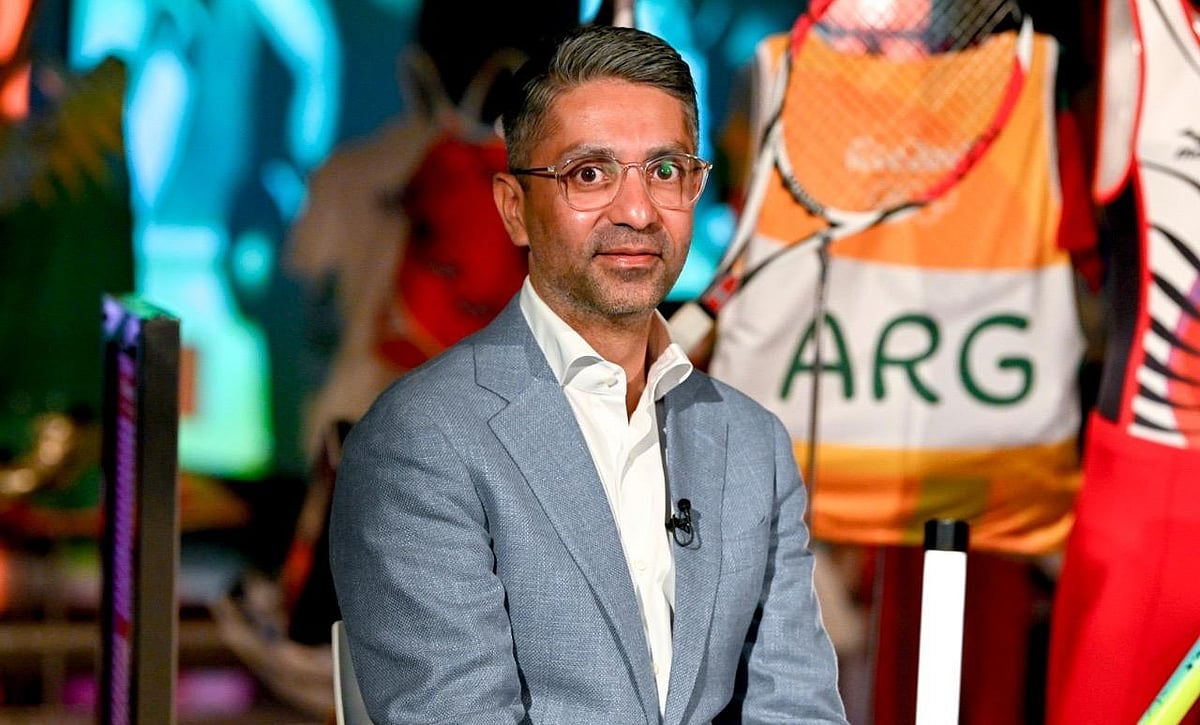
The model is co-creation and co-ownership. The programme belongs to the IOC — the OVEP and Let’s Move and ADFT is the implementing partner. Bindra also explains how OVEP has become a more community-driven initiative. “It is now part and parcel of a lot of parent-teacher meetings. When parents come, the kids, all the parents come together, they do an OVEP activity, have a little play, have a little fun and break the ice.”Bindra gives another example of behavioural change. “What we noticed early on in PE classes in schools… girls normally never ventured out or very few would. What we did was we framed them into mixed-team activities or mixed-gender activities, which helped the girls and boys to play together.
“The boys were a little grumpy the first week, but after a couple of weeks or a few days or a few months, they realised that the girls are actually very good at what they do. So what did that do? There was suddenly a behavioural change. There was more respect for girls because in sport everybody is equal.” So much was the interest among girls that they started captaining teams.
“During the time when Odisha was hosting the FIFA Under-17 Women’s World Cup there was a football fever. In about 100 schools at that time, we did an inter-school tournament. And you’d be surprised to know that 64 of these 100 teams were actually captained by girls and were nominated by boys.”
Bindra speaks about the knowledge these children have. “You’ll be surprised to know the knowledge that these kids have of the Olympic movement. When I go and visit, I’m always a little bit scared because these kids have much more understanding and knowledge about the whole Olympic history and the whole Olympic movement.”
“All these schools will celebrate Olympic Day and you’ll see all these schools involving themselves on Let’s Move. And they are happy to be part of this campaign,” he says.One more significant change is the way people started looking at physical education teachers. What we saw was that this programme has also uplifted the profile of PE teachers because,” says Bindra.
“They are part of a global movement. They’re part of a global campaign. The state authorities understand the power of the five rings. They understand the power of the Olympics.”
Bindra spoke about a delegation of five or seven young kids from government schools in Assam who visited the IOC last year for four or five days. “They saw the Olympic Museum. They went to the Olympic House. It was the first time they sat on a plane. So, you know, it’s a small role the programme is playing, but it is shaping young people.”
While speaking on the revenue model, Bindra said it is quite sustainable. “Because the model is co-creation and co-ownership. So, the Abhinav Bindra Foundation Trust (ABFT) pumps in an X amount of money every year, and the state authorities also put in a little bit of budget into the OVEP.
“The expense is in paying the trainers. All the teachers have to be taught how this programme has to be run. The ABFT goes on the ground and trains the trainers month on. The government spends money in bringing all the teachers together (the TA, DA, food, etc). So, the government puts in money there. The government has to print books because it’s part and parcel of the curriculum. The budgets are not very massive. We found this very unique way of co-creation. The IOC supports us with content and their trainers every year. That is the way we’ve created this model of co-ownership, co-value creation, which then makes it sustainable.” The Indian Olympic Association (IOA) is also kept in the loop and “are put into copy in everything that we do”.
LA 2028
“We may be disappointed in our medal tally because it came down from Tokyo but if you saw the overall performance of athletes, I think you would agree that the overall performance per se was very good in a sense. Many came closer in their overall performances or closer to their personal best. Of course, I think what we need to see is we need to have more Indian athletes on the ground in LA. So, I think the last time around in Paris it was about 100 odd (117) athletes. We need more Indians to qualify. I think this will increase our chances. In certain sports we are very strong.
“Shooting being one of them, we finally had success after a little bit of a lull in Tokyo. I hope that brings in renewed confidence into our athletes. There is a good machine in India where it continues to create new talent in the sport.”
Hopefully, this time we will do better most probably.
What is OVEP?
Developed by the IOC, OVEP consists of a series of free and easily accessible teaching resources that complement school curricula using the context of Olympic sports and the Fundamental Principles of Olympism. OVEP communicates the long-term benefits of sport and physical activity through an understanding of Olympism and its impact on individual health, enjoyment, and social interaction. It consists of a series of free and easily accessible teaching resources that complement school curricula using the context of Olympic sports and the Fundamental Principles of Olympism. OVEP communicates the long-term benefits of sport and physical activity through an understanding of Olympism and its impact on individual health, enjoyment, and social interaction.